
Command word
Critically evaluate — weigh strengths, limitations and competing evidence before reaching a reasoned judgement.
OwnVoice Academic helps you break down coursework questions, develop your ideas, connect experience with academic thinking and review your work before submission.
OwnVoice Academic helps you understand what your coursework brief is asking you to address:
Clear, immediate guidance designed with academic integrity in mind.
Free, no account required. OwnVoice supports your academic work. It does not complete assessed work on your behalf.
Use OwnVoice responsibly
Learn what OwnVoice does and does not do, how to check sources, use genuine experience, protect confidentiality, disclose study-support tools when required and follow your institution’s rules.
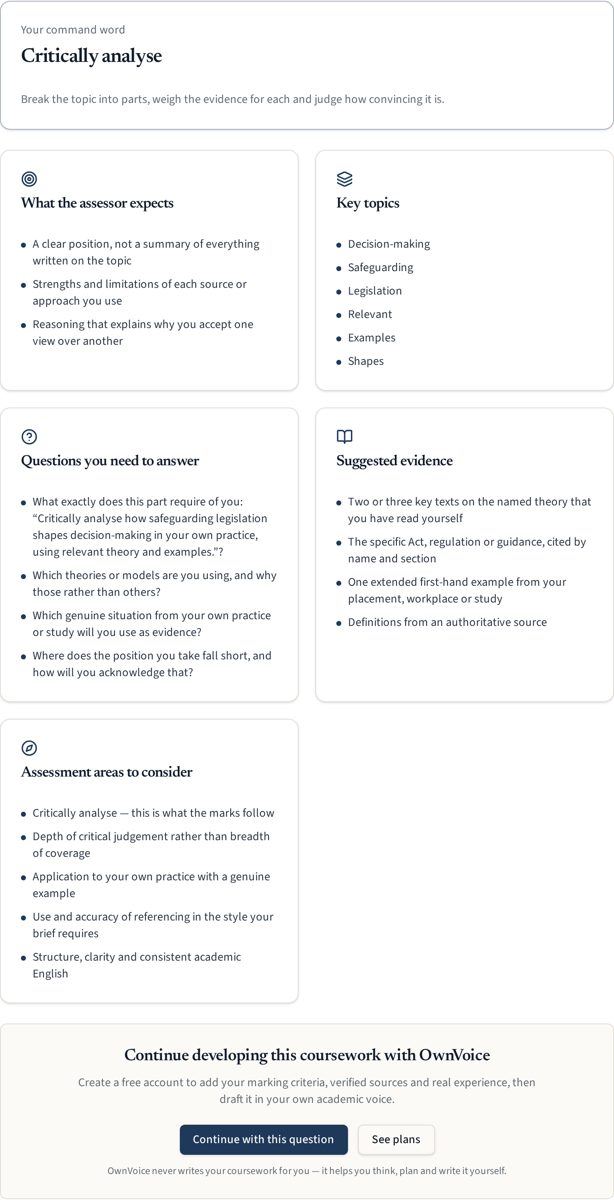
Paste the question from your brief and see immediately what it is actually asking you to do — before you write a single word.
Paste your coursework question and get:
Worked example
“Critically evaluate the impact of person-centred care on outcomes for adults with learning disabilities.”
Critically evaluate — weigh strengths, limitations and competing evidence before reaching a reasoned judgement.
Judge how person-centred care affects outcomes for a defined group, rather than only describing the approach.
A clear position supported by verified evidence, alternative perspectives and attention to real-world limitations.
Choice and control; communication; quality of life; safeguarding; implementation barriers; how outcomes are measured.
Which outcomes matter most? What evidence challenges the claimed benefits? Whose perspective is missing? What limits implementation?
Define the scope and outcome measures, then compare evidence for benefits with evidence about limitations before forming your position.
This is a thinking plan, not a ready-made answer. The evidence, reasoning and final words remain yours.
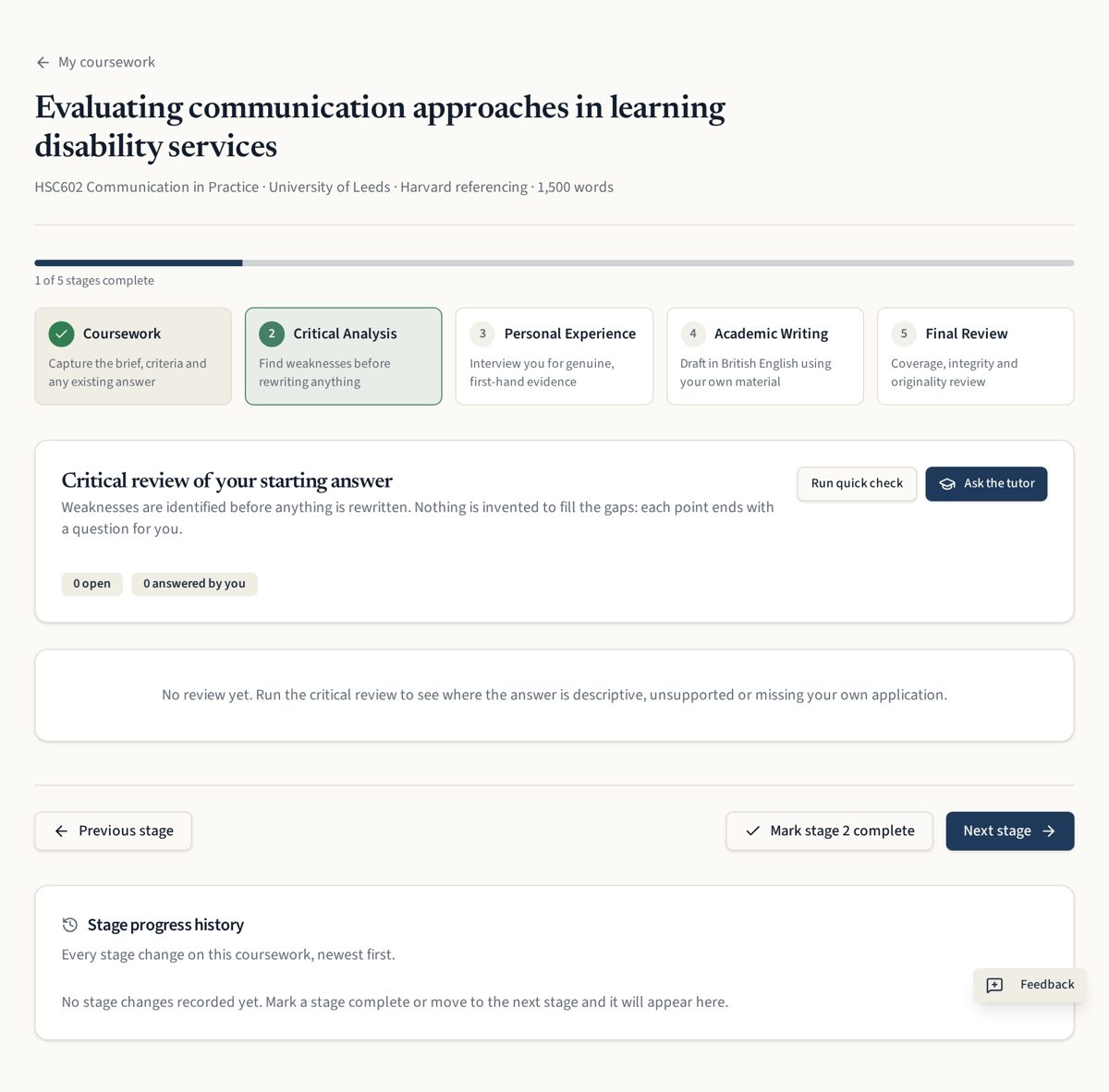
Five clear stages help you move from an unfamiliar brief to a careful review of work you wrote yourself.
Identify the command word, scope, concepts, evidence needs and marking criteria.
Test claims, compare evidence, question assumptions and form your own judgement.
Link genuine placement, workplace or learning experiences to academic concepts.
Build a clear argument, logical sections, key points and an evidence plan.
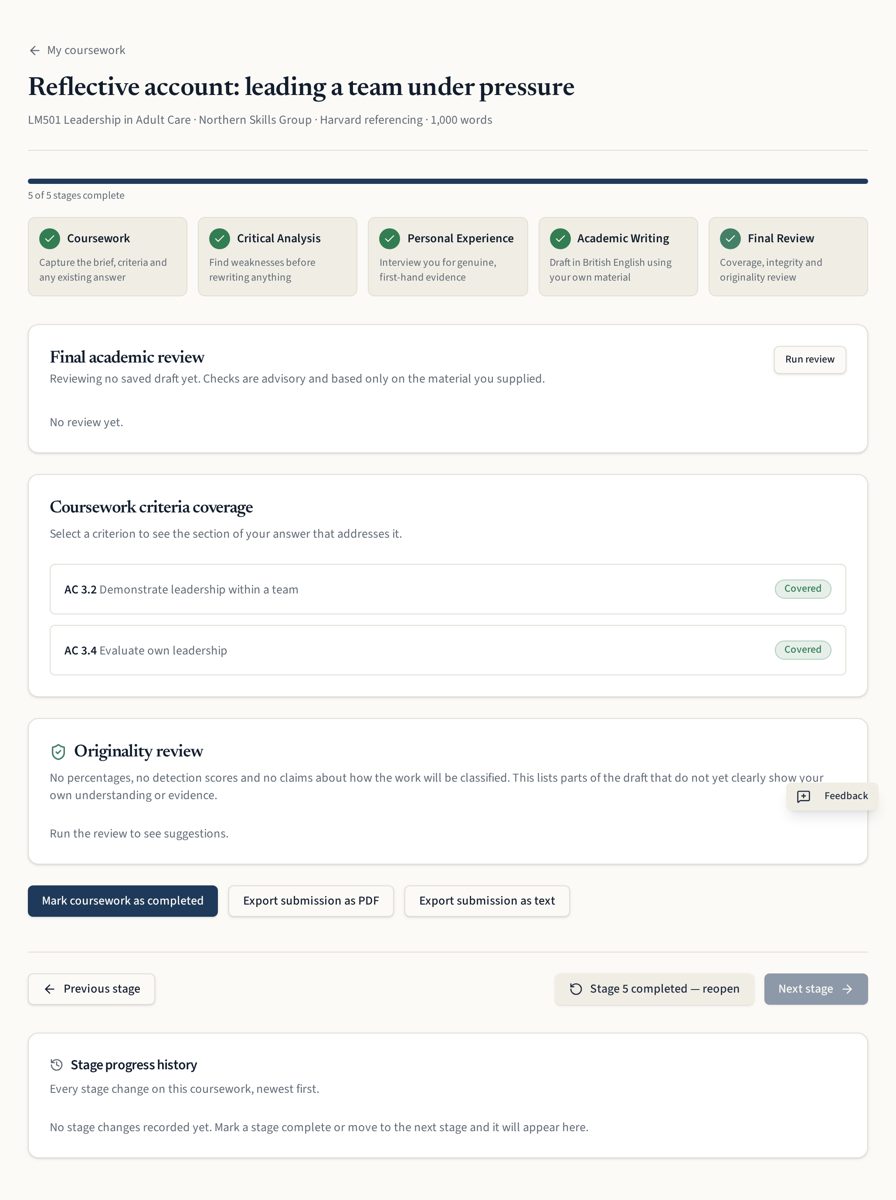
Diagnose relevance, analysis, structure, references and remaining gaps.
By the end of the workflow, you should understand what your assignment requires, have a clearer plan for your own work and know where your evidence and reasoning need strengthening.
Understand the question
See what your coursework is asking before you begin writing.
Challenge your thinking
Use structured questions to move beyond description.
Check your work
Review your draft against the marking criteria.

Use the same structured workspace for university, placement and professional study.
Moderated student testimonials, academic integrity case studies and honest, aggregate results — published in full, with nothing invented.
The decoder needs no account, and your first three coursework projects are free. Pro includes unlimited projects and full work history, with a 30-day money-back guarantee. Paddle.com handles payments as Merchant of Record.
Your material, organised
Store genuine placement, workplace, personal learning and professional examples, including skills developed and lessons learned. Link them to reflective or evidence-based coursework without inventing experience.
Save British English, preferred terminology, sentence preferences and writing conventions so your work stays consistent with choices you control.
Check the brief, marking criteria, critical analysis, evidence, experience, references, unsupported claims and areas requiring further thought before you submit.
Start with your own question — the decoder is free and needs no account. Create an account when you want to keep the breakdown, build your Experience Bank, and develop and review your coursework.
OwnVoice does not write your assessed coursework for you.